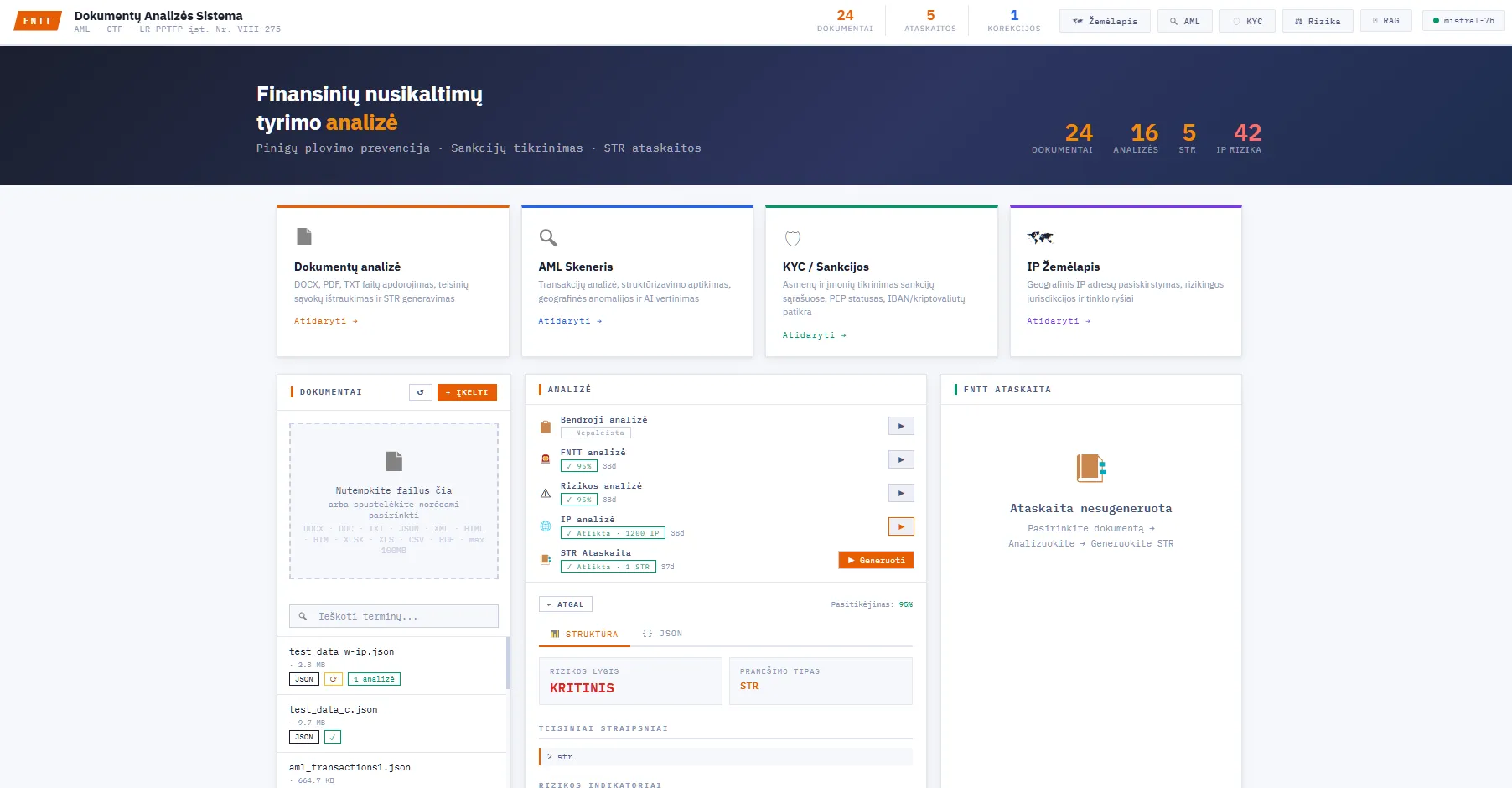
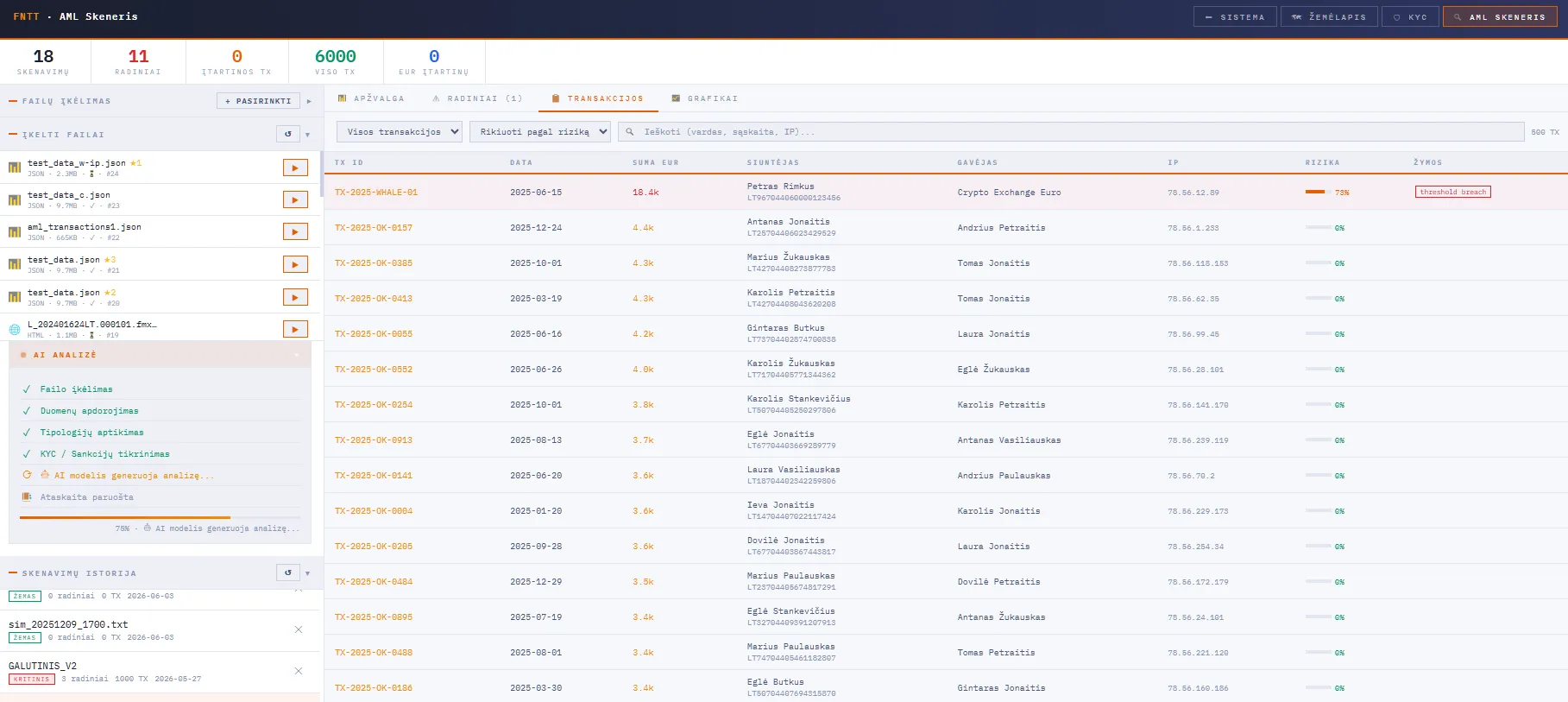
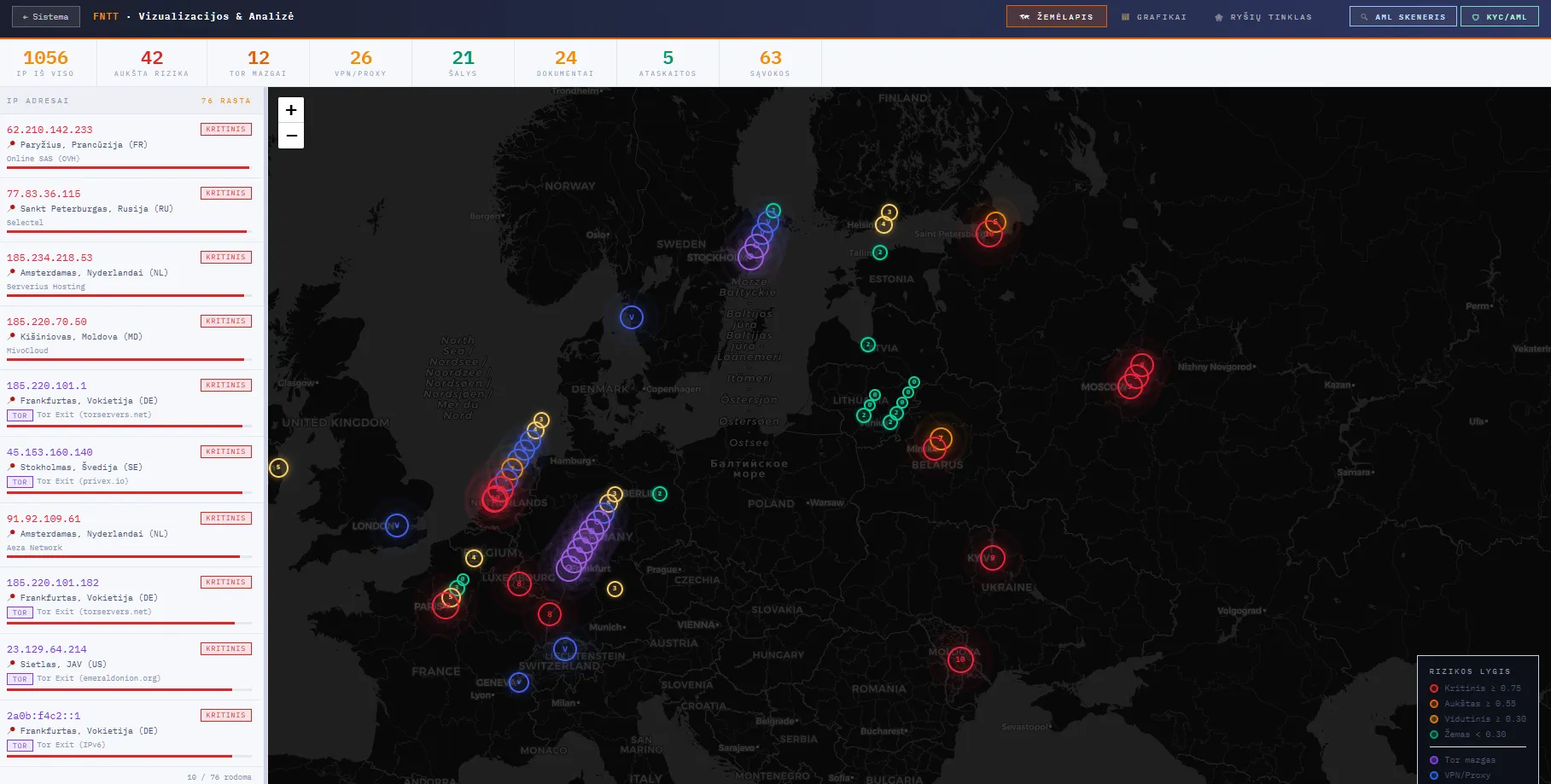
Global Transaction Monitoring - Mako
Screen payments, transfers and crypto flows in real time against sanctions, AML typologies and behavioural baselines — with alerts that reach your team the moment a pattern breaks, across every border and rail you operate on.
Why transaction monitoring earns its place at the centre of risk and compliance
A payment carries risk the moment it leaves an account. Reviewing it after the fact produces a paper trail; watching it as it moves gives a team an actual chance to act.
Stay ahead of the regulator, not behind it
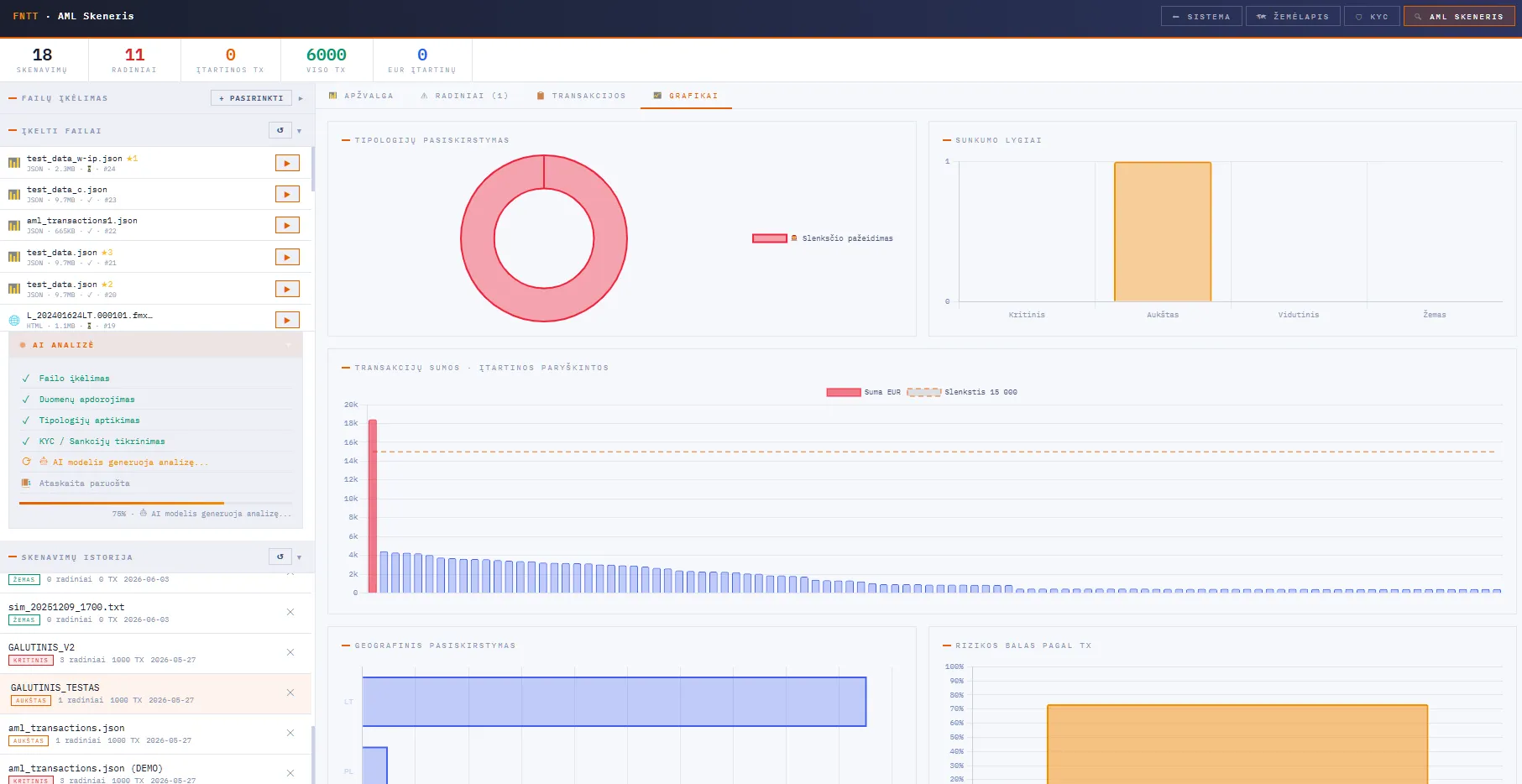
Every payment is screened against sanctions lists, PEPs and watchlists as it moves — not batched up for a review days later. Compliance becomes a live property of the transaction, not a monthly project.
Shrink your exposure to enforcement
A clear audit trail and rules your own team can tune close the gap regulators actually look for — the difference between a documented control and a shrug when something slips through.
Catch it before the customer feels it
Velocity checks and pattern recognition surface account takeovers and fraud rings while there's still time to act — protecting the people on the other end of the transaction, not just the balance sheet.
See the network, not just the transaction
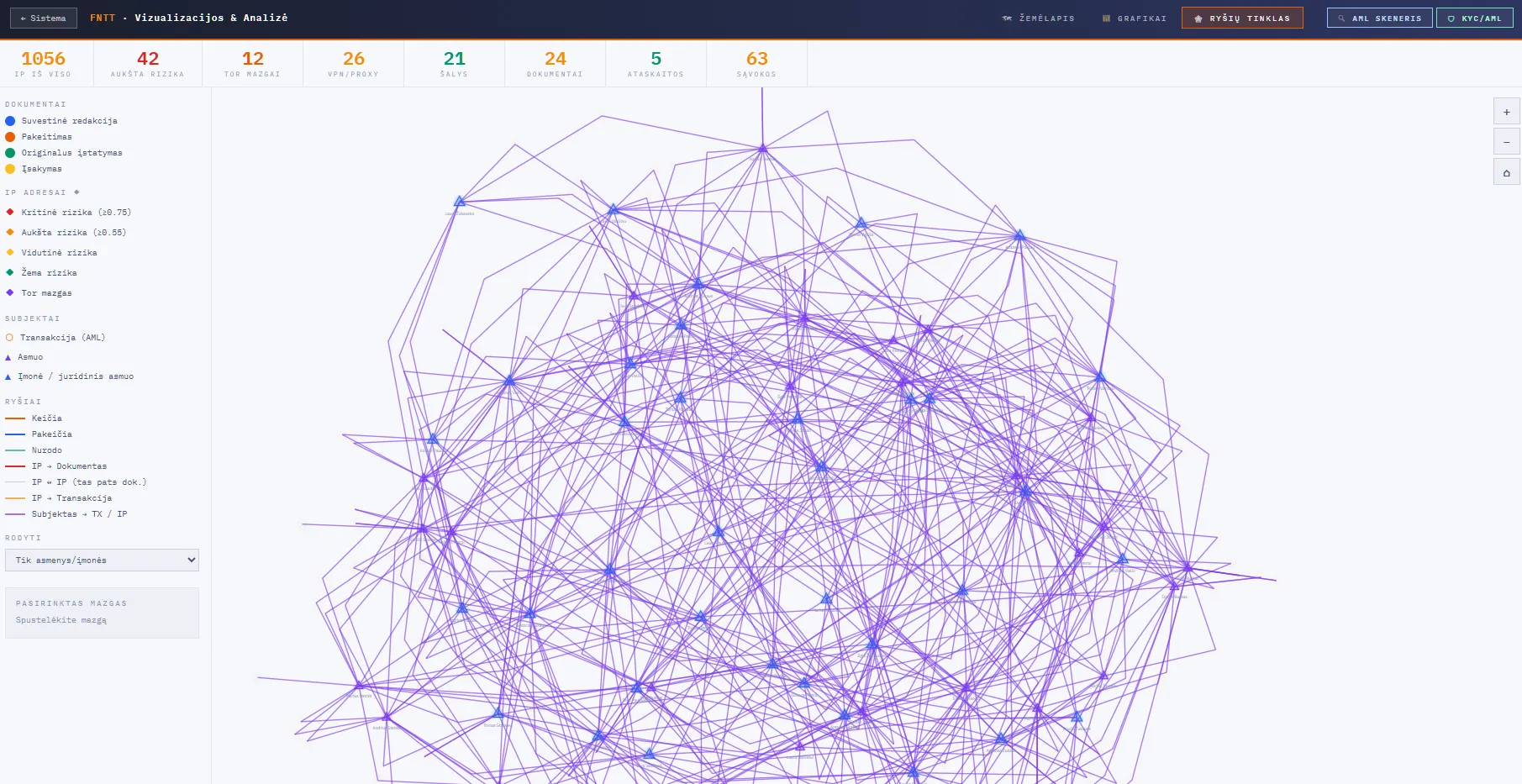
Device signals, behavioural drift and network links expose what a single transaction never would on its own — the connections between accounts, the reused devices, the timing that gives a laundering chain away.
What separates a real control from a box-ticking one
Plenty of tools monitor transactions. Far fewer let a compliance team run them without waiting on engineering, or prove a rule works before it's live.
How a transaction actually moves through the system
Real-time scoring, not a queue
Each transaction gets a risk score the instant it's initiated, so it can be approved, declined or routed to a human — without adding friction for the customers who were never the problem.
Rules your compliance team owns
Thresholds and typologies change as regulation and fraud tactics do. Rule changes should be something your team ships in an afternoon, not a ticket sitting in an engineering backlog.
Test before it goes live
New or adjusted rules run against historical and live traffic in a sandbox first, with pattern suggestions drawn from your own data — so you tune for fewer false alarms without opening a blind spot.
One export, not five re-entries
SAR/STR-ready reporting and native links into KYC and CRM systems mean the same case data feeds every downstream process once, instead of being retyped for each one.
Every finding carries its own evidence
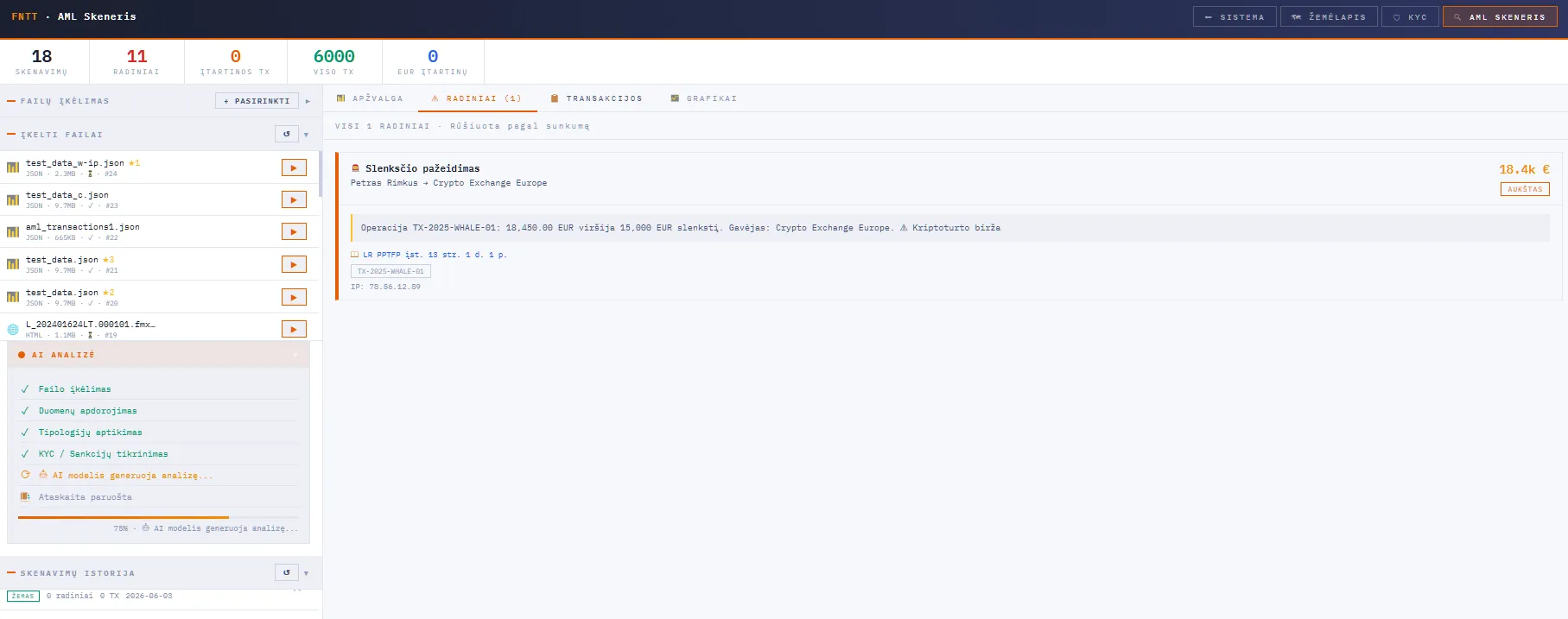
A flagged transaction shows the rule that fired, the risk indicators behind it and the legal basis for reporting it — so an analyst spends time deciding, not reconstructing context from scratch.
The habits that make monitoring hold up under scrutiny
Transaction monitoring works best as one layer inside a broader customer risk assessment — not a standalone box ticked once and forgotten.
Read the money and the identity together
A transaction is only half the picture without the identities behind it. Tying monitoring to your existing KYC and customer due-diligence data is what turns "this amount looks odd" into "this doesn't match what we know about this customer."
Judge behaviour against its own baseline
A retail current account and a payments-heavy business account don't share a normal. Comparing a customer against peers with a similar profile — rather than one fixed threshold for everyone — is what separates a real signal from noise.
Watch the pace of money, not only its size
Rapid, repeated movement is often a stronger tell than any single large transfer. Velocity rules need headroom for legitimate bursts — payroll runs, seasonal spikes — or they drown a team in alerts nobody trusts anymore.
Treat routing data as a clue, not a verdict
IBANs and geolocation still narrow things down, but with sponsor-bank arrangements behind many digital accounts, a single routing signal can point the wrong way. It belongs alongside other evidence, never standing alone.
Keep what you saw, not just what you flagged
Intelligence that arrives next month should be able to reach back into this month's transactions. Retained history supports that re-examination — and it's also what keeps a detection model sharp as it learns from real outcomes over time.
Run it against your own transaction data before you commit to anything.
Pamatykite tai savo perimetre
Papasakokite, kur esate šiandien. CYBORA inžinierius — ne pardavėjas — atsakys, kas iš tiesų tinka jūsų situacijai.
- Atsakome per vieną darbo dieną
- Pritaikyta jūsų reguliavimo sistemoms
- Jokių įsipareigojimų, jokio pardavimo
Perimkite savo perimetro kontrolę
Užsiregistruokite CYBORA GRC ir HybridSOC platformos bandomajai demonstracijai. Viena komanda, atsakinga už visą jūsų kibernetinio saugumo ciklą.